Built Not Born Podcast · 22 May 2026
The Truth About Selling Grenade To Mondelez
Grenade co-founder Juliet Barratt on building a distinctive brand, scaling beyond the founders and the emotional reality of selling the business to Mondelez.
 FeaturingJuliet BarrattCo-founder, Grenade
Episode guide
About this episode
Juliet Barratt’s Grenade story is a lesson in how a founder-led brand can move from a niche market into the mainstream without losing the qualities that made it distinctive in the first place. In this episode, Juliet talks with Chris and Helen about leaving teaching, joining the sports nutrition distribution business run with Al, spotting how forgettable much of the category looked, and deciding that Grenade needed to be instantly recognisable. The conversation then follows that decision all the way through product development, investment, team building, founder dependence and the eventual sale of the business to Mondelez.
Distinctiveness was practical, not decorative. The original product was packaged in a grenade-shaped container after military friends testing the product helped inspire the name. Juliet recalls investing roughly £17,000 to £18,000 in the tooling at a stage when that was a significant commitment. The packaging created retail challenges because it did not behave like everything else on the shelf, but that was also part of its strength. Grenade carried the same thinking into its marketing, including driving a tank down Oxford Street and using a bold military-inspired identity. Juliet is clear that being different only works when the product remains relevant and there is a genuine need behind it.
The next stage was credibility and product truth. Grenade expanded beyond its first caffeine-based product and eventually moved into protein bars, with Carb Killa taking the brand from specialist sports nutrition into mass-market food. Juliet explains why taste mattered as much as the nutritional proposition. The team worked with a chocolate manufacturer, tested 27 versions before launching the first bar, and resisted simply putting the Grenade name on an off-the-shelf product. That emphasis on a product people genuinely liked helped create repeat purchase and trust, rather than relying on marketing claims that every competitor could make.
Growth also changed what the founders needed from the business. Juliet describes a lean, cash-generative early operation, followed by investment in 2014 and further private equity involvement later. Her experience is a reminder that investment is a relationship, not simply money arriving in the bank. Alignment on time horizon, day-to-day involvement, strategic value and eventual exit matters. Investors also brought more structure, including stronger financial leadership, which freed the founders to focus on the areas where they added the most value. As Grenade grew, Juliet and Al also had to accept that specialists could do parts of the job better than they could.
The sale brought the final version of that lesson. Juliet says there had already been a failed sale process before the eventual 2021 transaction, and that Grenade reaching a point where it could outgrow its founders was necessary for the next stage. She describes due diligence as intensely personal because buyers are examining something the founders have spent years building. Even after completion, the defining feeling was not simply financial. Juliet recalls her lawyer asking whether the money had reached her account and realising she had not checked. The episode makes the business exit feel less like a finish line and more like the result of years spent building a product, brand, team and operating structure capable of continuing without the founders at the centre of every decision.
Key takeaways
What you'll learn
- Distinctive branding works best when it is attached to a product people genuinely want and understand.
- Product truth creates trust: repeat purchase is stronger evidence than broad claims about being the best.
- Credibility built in a specialist market can create a bridge into a much larger mainstream market.
- Investment should be assessed for alignment, structure and strategic value, not treated as a badge of success.
- Growing a business means accepting that experienced specialists may do important jobs better than the founders.
- Culture matters during scale, but job-specific capability becomes more important as the organisation becomes more complex.
- A business that can outgrow its founders is better placed for the next stage, including a potential sale.
- Exit readiness includes emotional readiness because due diligence and final separation can feel deeply personal.
Questions from this episode
Frequently asked questions
How did Grenade get its name and distinctive packaging?
Juliet explains that friends in the military tested early products and one described the effect as being like a grenade going off. The name stuck. Grenade then invested in tooling for a grenade-shaped container, giving the product a recognisable physical identity even before a customer read the label.
What helped Grenade move from sports nutrition into the mass market?
The launch of Carb Killa protein bars moved Grenade beyond specialist sports nutrition. The brand brought credibility from its existing category, while putting significant effort into taste, product development and a proposition that could compete for a much broader snacking occasion.
Why did Juliet Barratt and Al take investment if Grenade was already generating cash?
Juliet says the first investment was not simply about funding day-to-day operations. It helped de-risk the founders at a time when much of the range was exposed to possible regulatory change around caffeine, and later investors added structure, contacts and strategic support.
What did Juliet learn about choosing investors and building a team?
Her emphasis is on alignment. Investors need compatible expectations around involvement, value creation and exit. Team members also need the capability for the role and a cultural fit with the business. As Grenade grew, hiring people who could do specialist jobs better than the founders became essential.
What did selling Grenade to Mondelez feel like for Juliet Barratt?
Juliet describes the sale as emotionally difficult and final. The process involved close scrutiny of a business she had lived with for years, and completion meant accepting that it was no longer hers to run. She says the transaction was not simply about the money and that the emotional side of an exit is easy for outsiders to underestimate.
Resources from this episode
Put the ideas into practice.
Download the practical resources created from this conversation.
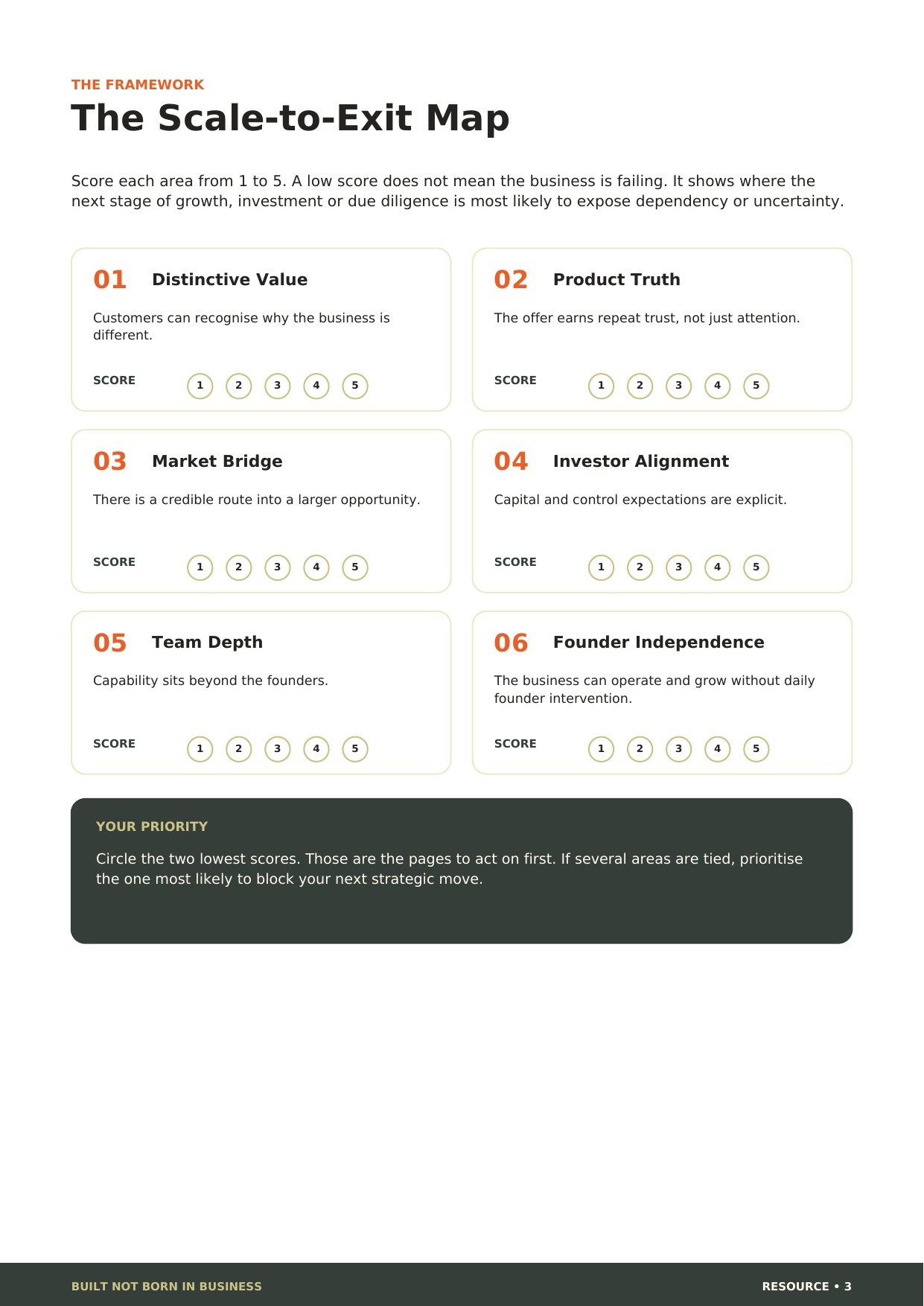
The Founder Scale & Exit Readiness Blueprint
A practical workbook inspired by Juliet Barratt’s Grenade story, helping founders assess the foundations that make a business easier to scale and better prepared for a future sale. It covers product truth, distinctive brand value, market expansion, investor alignment, team depth, founder independence, buyer fit and a focused 90-day action plan.
Get this resource →