Built Not Born Podcast · 19 June 2026
The Most Successful Founders Are All Faking It
Frankie James joins Chris and Helen to unpack founder self doubt, trust, community, social capital and the less polished reality behind business success.
 FeaturingFrankie JamesCo-Founder, Ideas Community
Episode guide
About this episode
Successful founders can look certain from the outside, but this conversation with Frankie James challenges the polished version of entrepreneurship. Frankie is co-founder of the Ideas Community, which includes IdeasFest, the Great British Entrepreneur Awards, the UK Startup Awards, the UK Fast Growth Index and the Great British Industry Awards. She joins Chris and Helen to talk about what founders are really like behind the confident public image, why self doubt is normal, how trust is earned and what becomes possible when the right people are brought together.
Frankie explains that IdeasFest did not begin with a grand festival business plan. It grew from necessity after the pandemic disrupted the events world and online webinars stopped feeling like the kind of human connection she wanted to create. The first event had no photographs, testimonials or established festival track record, yet around 1,250 people still turned up. Frankie sees that response as the result of years spent building an entrepreneurial ecosystem, community trust and relationships. The conversation also explores why IdeasFest works even when the weather does not, how an informal setting can lower barriers, and why putting ambitious founders into the same environment often creates value that no organiser can script in advance.
Trust becomes one of the clearest business themes in the episode. Frankie argues that there is no real shortcut: people need to see you show up, follow through and support others over time. She describes that accumulated reputation as social capital and makes the point that people talk about you in rooms where you are not present. A personal recommendation can speed up the start of a new relationship, but only because somebody trusted is lending you part of the credibility they have already earned. That same principle appears in the way communities grow. Frankie values people who participate, contribute and support the ecosystem rather than only arriving when they want a stage, an introduction or an opportunity.
The episode also gets into the emotional reality of building a business. Frankie describes entrepreneurs as naturally optimistic and curious, but rejects the idea that successful founders never question themselves. She is critical of the glossy version of entrepreneurship that hides the difficult parts, and she argues for spaces where founders can be more candid about the journey. From taking a moment to absorb what has been created at IdeasFest, to using awards applications as a chance to put progress on paper, the conversation makes a case for recognising what has already moved rather than living permanently in the next target. Frankie also reflects on how her own idea of happiness has changed, with time and wellbeing becoming more important, even while business and personal life remain deeply interwoven. The result is a practical discussion about ambition without performance, reputation without shortcuts and community that works because people give as well as take.
Key takeaways
What you'll learn
- Founder confidence and founder self doubt can exist at the same time.
- Trust is built through consistent behaviour, not a single claim or piece of content.
- Warm introductions can accelerate a relationship because trusted people transfer context and credibility.
- The strongest communities reward people who show up and contribute before asking for access or attention.
- People at different stages of business can create value for each other when status is taken out of the conversation.
- Recording and celebrating progress helps founders see movement that the next target can easily hide.
- What success means can change, with time and wellbeing becoming more important alongside growth.
Questions from this episode
Frequently asked questions
Do successful founders still experience self doubt?
Frankie says founders tend to be optimistic and bullish, but she challenges the idea that successful entrepreneurs never doubt themselves. In her view, more honest conversations help counter the polished version of entrepreneurship that can make uncertainty look unusual when it is not.
How does Frankie James say trust is built in business?
She says there is no shortcut. Trust comes from repeatedly showing up, doing what you said you would do, making an effort to support people and building a track record over time. That behaviour becomes social capital and shapes what people say about you when you are not in the room.
Can a personal recommendation speed up trust?
Yes. Frankie says a recommendation from somebody she already trusts can move a new person several levels above a cold introduction. The recommendation works because the referrer has already done the groundwork and is putting some of their own credibility behind the introduction.
Why does Frankie think founder communities can be valuable at different stages of business?
She argues that value moves in both directions. Earlier stage founders can gain advice and connections, while experienced founders can be energised by people who are still close to the fast moving, experimental stage of entrepreneurship. Her view is that everybody in the room can be valuable to somebody else.
Why does the episode talk about celebrating progress?
Frankie and the hosts discuss how easy it is for founders to move straight to the next target. Frankie says that stepping back to absorb what has been created, and even writing an awards application, can help founders recognise the journey and the progress that day to day work can hide.
Resources from this episode
Put the ideas into practice.
Download the practical resources created from this conversation.
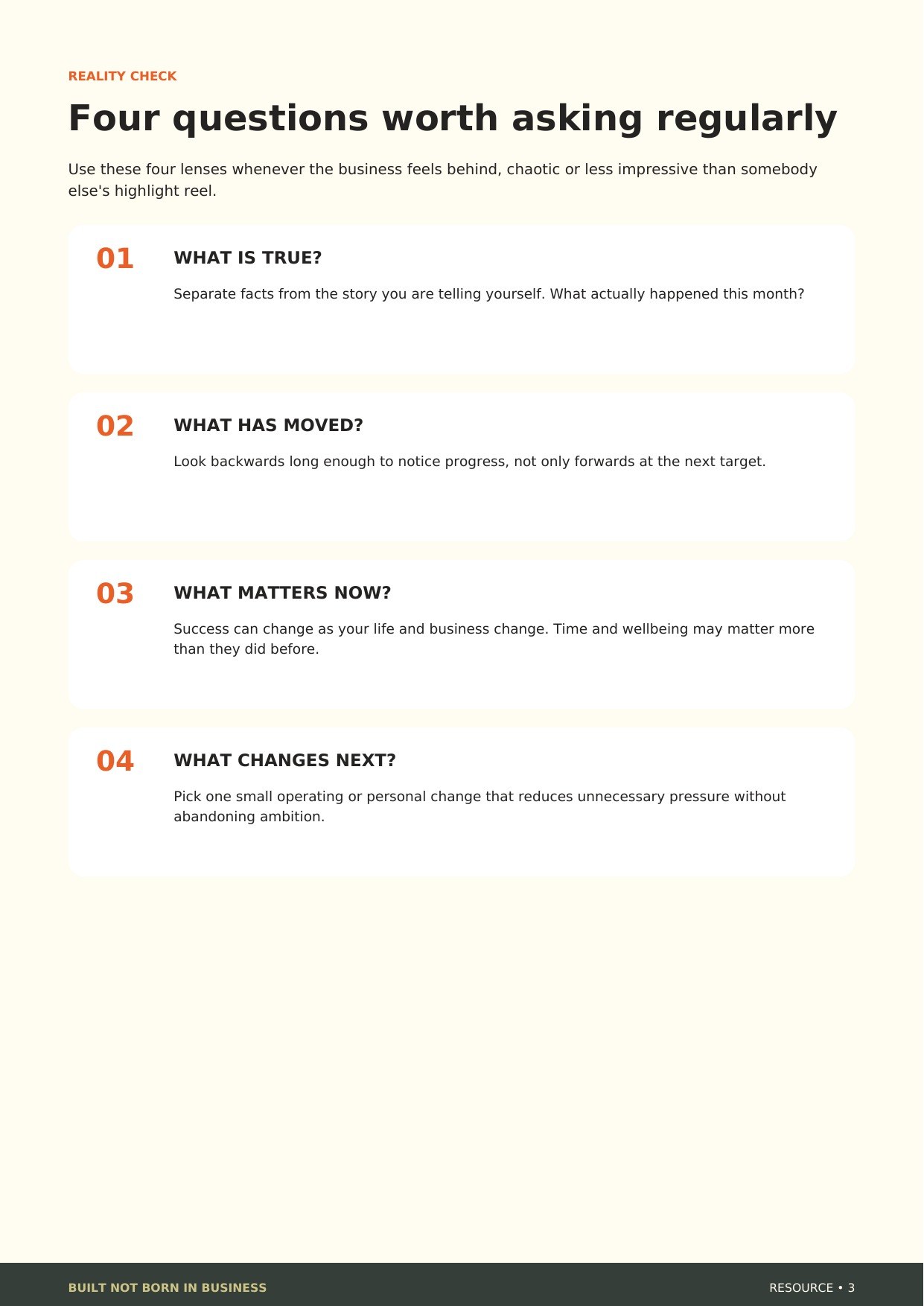
The Founder Reality Check
A guided reflection workbook for founders who are ambitious but tired of measuring themselves against the polished version of entrepreneurship. It helps separate facts from self doubt, record real progress, rethink what success means now and test one practical change over the next 30 days.
Get this resource →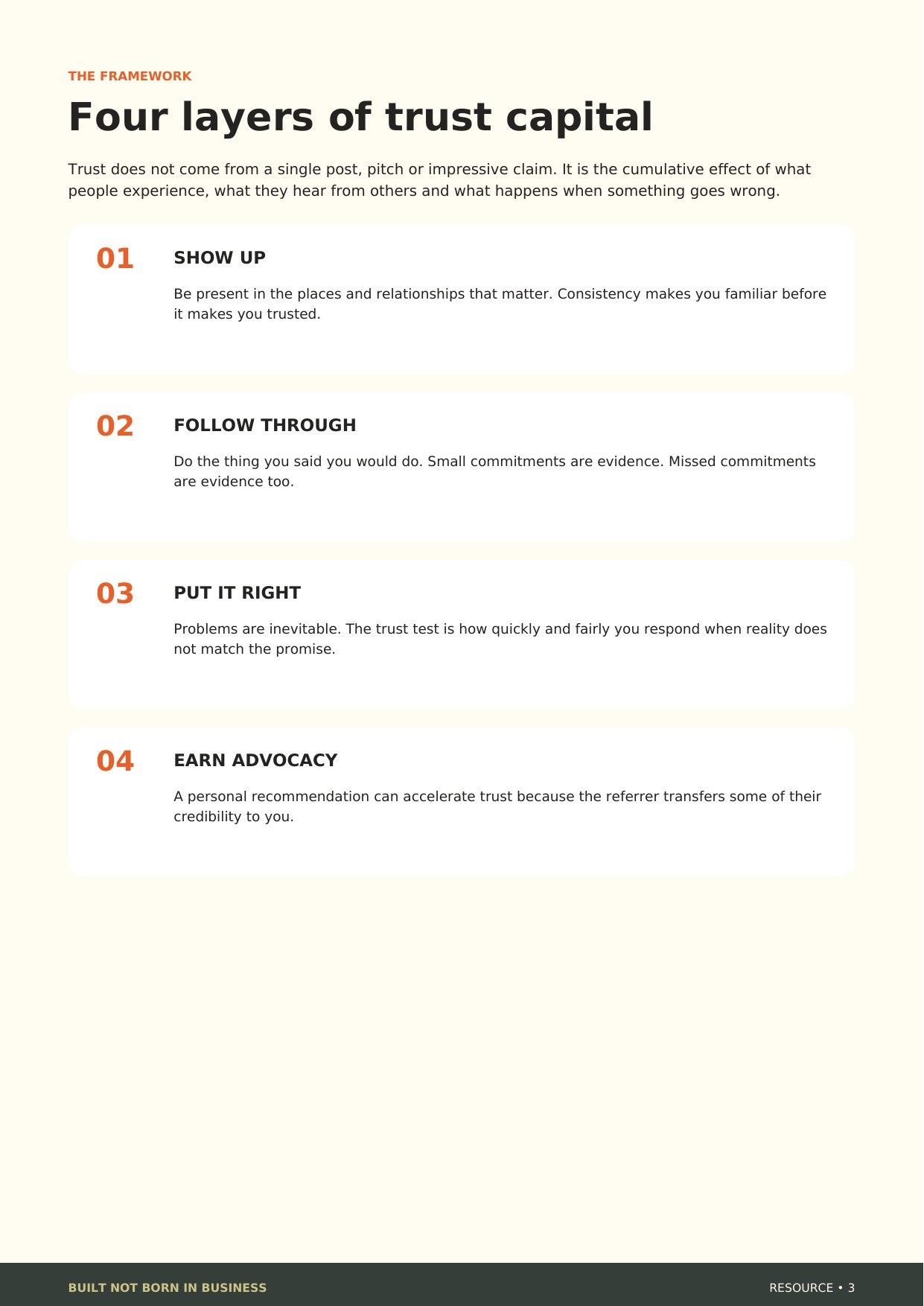
The Trust Capital Playbook
A practical workbook for turning trust from a vague brand promise into repeatable business behaviour. It explains how consistency, follow through, recovery and warm introductions shape reputation, then helps you audit trust gaps and build a 30 day improvement plan.
Get this resource →