Built Not Born Podcast · 17 July 2026
He Sold His Company. Then It Got Dark
Mark Sweeny on the hidden aftermath of a successful business exit, the loss of founder identity and how he used those lessons to build DeNovo Solutions differently.
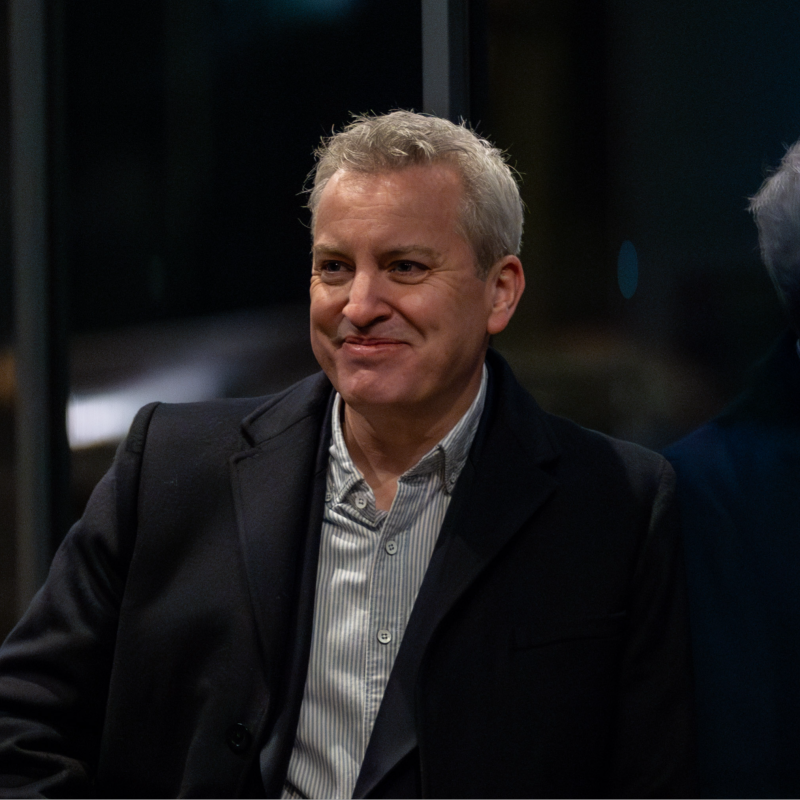 FeaturingMark SweenyGroup Chief Executive, DeNovo Solutions
Episode guide
About this episode
Selling a company is usually presented as the finish line. In this episode, Mark Sweeny talks about what can happen when the deal is successful but the founder is not prepared for what disappears with it. Mark built Certus Solutions over roughly six and a half years and sold the business in 2018. The exit was financially lucrative, yet he describes the signing day as one of the loneliest days he can remember. By the time he walked back across London after the deal, the feeling of achievement had already gone and what remained was a sense of emptiness.
That emotional aftermath became more difficult once the intensity of founder life had been removed. Mark says there was a period when getting out of bed by late morning felt like an achievement and much of his day was spent watching Netflix. The business had been designed to be sold, but the transaction removed far more than ownership. It removed structure, purpose, pressure and the constant stream of decisions that had organised his life. Much later, conversations with other entrepreneurs who had also exited helped him realise the experience was not unique. That recognition matters because the public story of an exit often focuses on the valuation and ignores the founder identity that is left behind.
Mark also explains what helped him move forward. His wife Natalie, entrepreneur Emma Sinclair and former colleague Rob English all played important roles in challenging him to think about what he still had to offer. Once he decided to build again, the energy returned quickly. The new company, DeNovo Solutions, was based in Wales, where Mark already had deep connections from earlier public sector technology work. He describes starting with paper, whiteboards and conversations with former customers, then building a strategy around a market that had changed since Certus. Five years later, Mark says DeNovo had reached around £12.5 million in turnover and employed about 140 people across Wales, the wider UK and Chennai in India.
The second-time founder lessons are a major part of the conversation. Mark says DeNovo could not have been built in the same way without the mistakes and experience of Certus. Cash flow is one of the clearest examples. He recalls Certus coming dangerously close to failure and says DeNovo became far more disciplined about creating cash, managing runway and understanding the financial rhythm of the company. He also talks about building a brand rather than simply a capable business, creating demand through positioning and experience, and making sure the brand promise is supported by real culture, values and delivery. Wales itself became part of the differentiation. Rather than being another technology company in a crowded London market, DeNovo could become more visible and more connected within the Welsh business ecosystem.
The episode also stays with the human cost of entrepreneurship. Mark talks about the responsibility founders carry, the importance of surrounding yourself with people who are better than you, and the impact an all-consuming business can have on partners and children. Chris shares his own difficulty switching off when he is with his son, which leads into a broader discussion about being physically present while mentally solving business problems somewhere else. For founders approaching an exit, recovering from one or considering a second company, this conversation is a useful reminder that success is not only about the transaction. It is also about purpose, relationships, better decisions and what you choose to build with the experience afterwards.
Key takeaways
What you'll learn
- A successful exit can remove purpose, structure and identity as well as ownership.
- Financial security does not automatically answer what a founder should do next.
- Trusted peers and family can help a founder recognise patterns they may not see alone.
- Second-time founders can turn previous mistakes into explicit design advantages.
- Cash-flow discipline and runway management were central lessons Mark carried from Certus into DeNovo.
- Brand, positioning and genuine differentiation can be designed intentionally rather than left to chance.
- Entrepreneurial ambition affects partners and families, so the journey needs honest conversations as well as commercial planning.
- Mark sees strong management teams, collaboration and giving back to the local ecosystem as part of building a durable company.
Questions from this episode
Frequently asked questions
Why can selling a successful business leave a founder feeling empty?
Mark Sweeny describes losing more than ownership when he sold Certus Solutions. The business had provided structure, responsibility, pressure, identity and a daily sense of purpose. Although the exit was financially successful, he says those things disappeared quickly and the expected feeling of achievement did not last.
What helped Mark Sweeny decide to start another company?
Mark credits several trusted people with helping him move forward, including his wife Natalie, entrepreneur Emma Sinclair and former colleague Rob English. Their conversations helped him recognise that he still had experience and ideas he wanted to use. He also saw a clear market opportunity and unfinished business from ideas that had not been realised after the Certus acquisition.
What did Mark do differently when building DeNovo Solutions?
He says the experience of Certus changed how he approached the second company. The strongest examples in the episode are tighter cash-flow management, more deliberate brand building, clearer differentiation, stronger management capability and a strategy that used Wales and its connected business ecosystem as an advantage.
Why did Mark build DeNovo Solutions in Wales?
Mark had a long connection with Wales through earlier public sector technology work and his wife Natalie is from the Welsh valleys. He also saw a strategic advantage in building the company there. He describes Wales as a connected environment across government, higher education and business, and believes DeNovo could have more impact and visibility there than in a crowded London technology market.
What does the episode say about the impact of entrepreneurship on family life?
Mark says entrepreneurship can become all-consuming and that partners and families can experience the consequences of a business that is not necessarily their own dream. He stresses the need to be mindful of that impact and to have honest conversations. The episode also explores the difficulty founders can have being mentally present with family when their attention is still occupied by business problems.
Resources from this episode
Put the ideas into practice.
Download the practical resources created from this conversation.
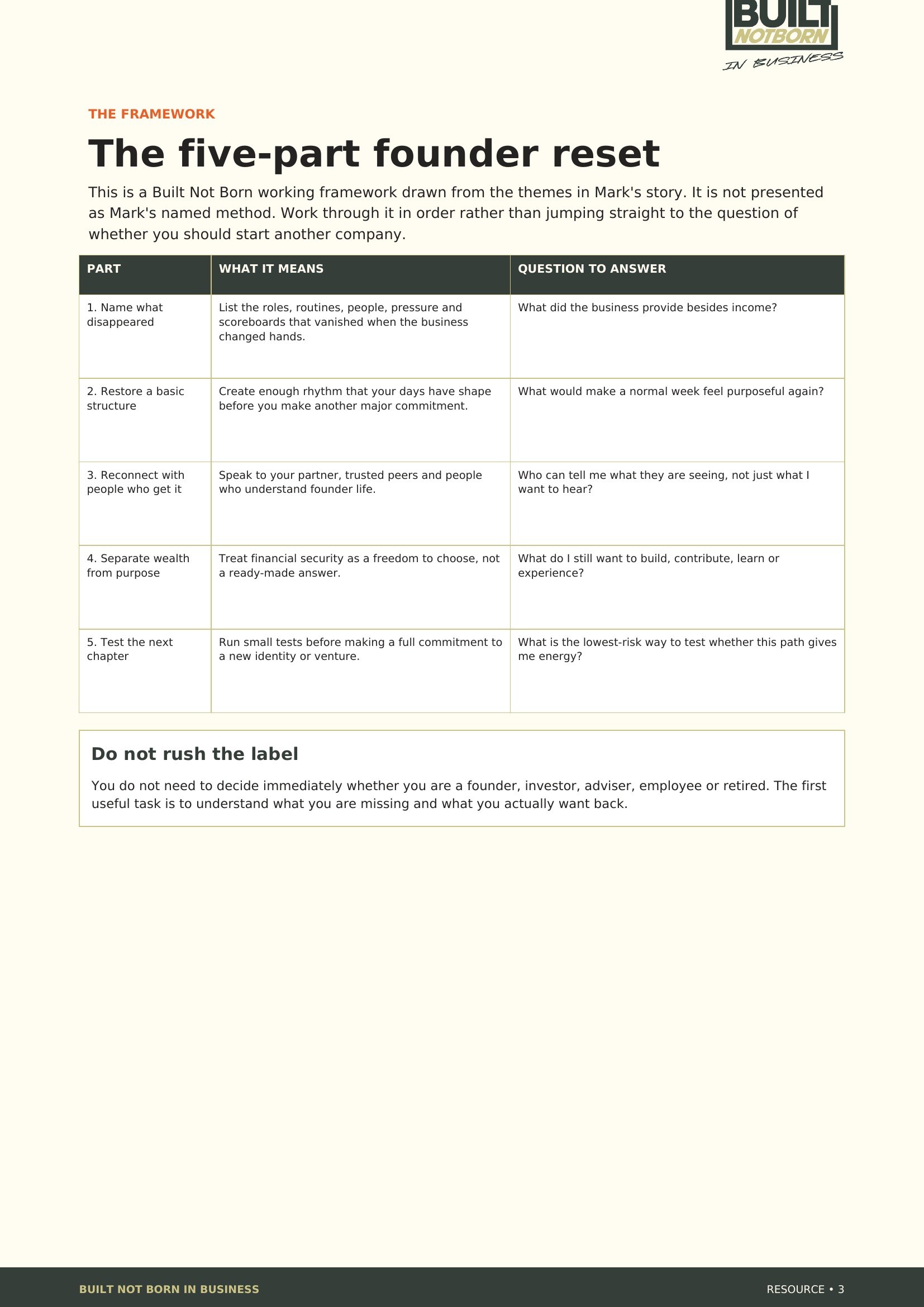
After the Exit: The Founder Reset Workbook
A practical workbook for founders who have sold, stepped away from or are preparing to leave a business. It helps you identify what the company provided beyond income, rebuild useful structure, have better conversations with the people around you and test the next chapter before making another major commitment.
Get this resource →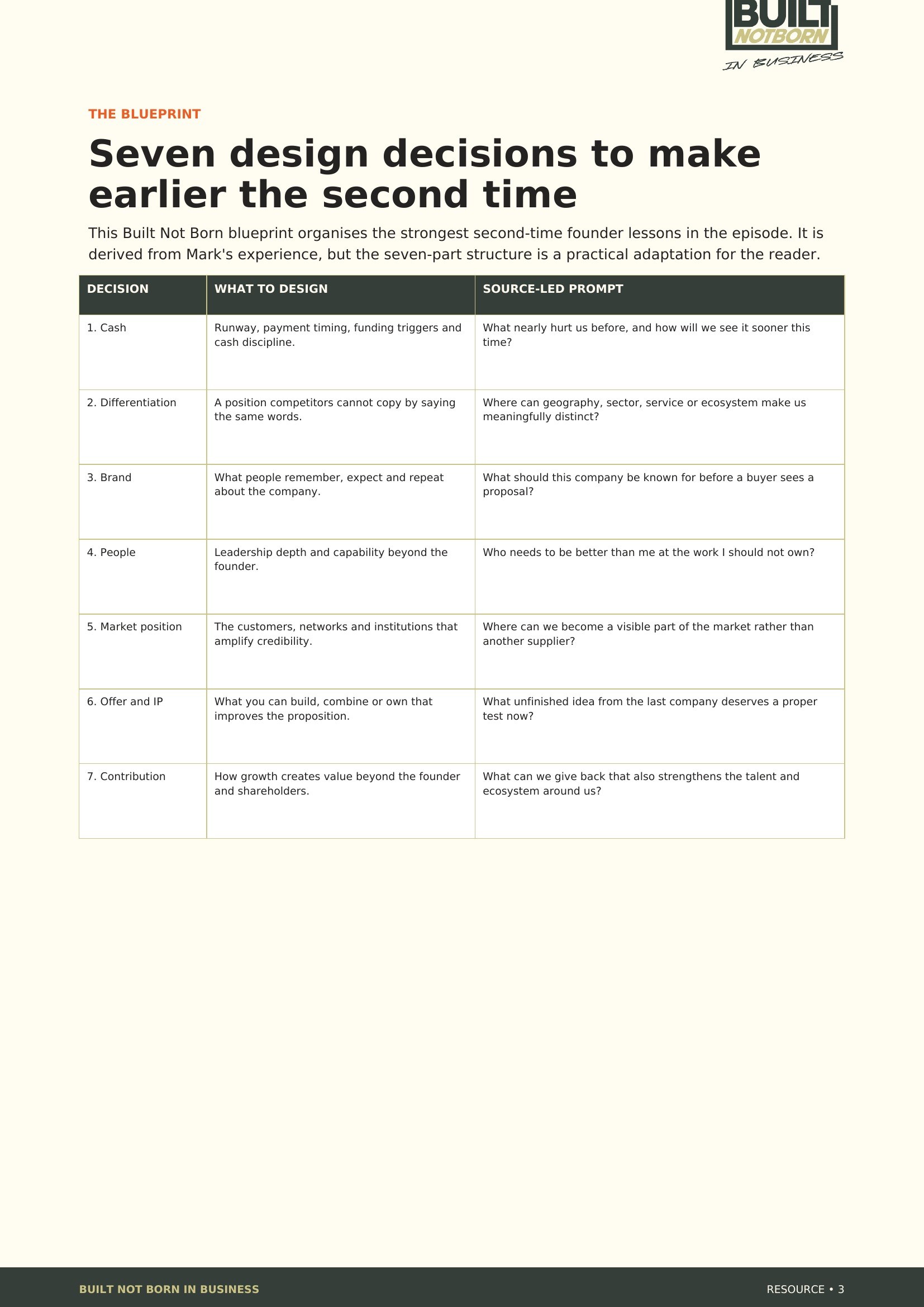
Build It Better the Second Time
A second-time founder blueprint for turning the lessons from one company into better design decisions in the next. It covers cash, differentiation, brand, people, market position, offer and IP, ecosystem contribution and a practical 30-day design sprint.
Get this resource →