Built Not Born Podcast · 23 October 2026
Is 2026 the Worst Year to Start a Business? The Truth
Would Chris and Helen start a business again in 2026? Their answer challenges the usual obsession with turnover, headcount and a big exit.




About this episode
Would you start a business in the UK in 2026, knowing what you know now? With costs rising and business owners facing pressure from employment costs, taxes and a difficult trading environment, Chris and Helen Butler ask whether entrepreneurship still makes sense. Chris admits he had begun telling people he probably would not start again. After hearing aspiring founders ask similar questions at an Elite Business event, he changed his view: yes, he would start, but his expectations and his definition of success would be different.
The conversation challenges the idea that there will ever be a perfect time to launch. Chris argues that uncertainty is part of entrepreneurship, and that tenacity often means replacing a flat “no” with questions about how something might be possible. Helen adds that entrepreneurs often need to adapt to circumstances beyond their control. Neither suggests that running a business is easy. Their focus is on identifying what is actually stopping someone from starting and what they can reasonably do about it.
One of the biggest themes is the business success story people are sold. Chris and Helen recall chasing a large team, high turnover and a potentially substantial exit. Their priorities have shifted towards a business that works for their family, offers more choices and can be enjoyable along the way. They discuss reducing their own team and question why scaling back is so often treated as failure, even when it creates a healthier or more suitable business for its owners. They also reflect on conversations with founders who found that selling a business did not deliver the fulfilment they expected.
The hosts distinguish turnover from profit and question the public celebration of businesses that appear large but struggle financially. Chris urges owners to understand their numbers monthly: what is coming in, what is going out and whether anything remains. Helen raises the importance of both business partners understanding those figures, even when one naturally takes the lead. They also describe reviewing recurring costs and asking which expenses are still necessary. AI, staffing decisions and the differences between micro-businesses and larger employers form part of the discussion.
Ultimately, the episode is about making entrepreneurship serve the life you want rather than assuming that growth, headcount or a multimillion-pound sale is the only worthwhile destination. Chris links money to the choices it can provide, while Helen emphasises enjoying the journey and remaining open to changing direction. Whether you are thinking of starting a business in 2026 or questioning the one you already own, this discussion offers practical prompts for defining success, understanding your financial needs and deciding what to do next.
Key takeaways
What you'll learn
- There may never be a perfect time to start a business, so identify the specific obstacle.
- Define success around your own income, freedom and priorities rather than someone else’s turnover.
- Scaling back can be a deliberate and positive business decision.
- Review income, costs and profit every month and examine recurring expenses quarterly.
- A business exit is not the only way to create financial choices or a satisfying life.
Questions from this episode
Frequently asked questions
Is 2026 a bad year to start a business in the UK?
Chris and Helen acknowledge economic pressures and rising business costs, but Chris says he would still start a business in 2026. He would approach it with more realistic expectations and a clearer idea of what he wants from it.
What should I consider before starting a business?
The hosts recommend asking what is stopping you, what you want your business to provide, how much income you need and whether your proposed model supports the life you want.
Is turnover or profit more important for a small business?
Chris argues that turnover alone is a poor measure of success for many owner-managed businesses. He emphasises profit, understanding costs and ensuring the business supports the owner’s financial goals.
How often should a business owner review finances?
Chris recommends reviewing key numbers monthly, including income, outgoings and profit. He and Helen also describe a quarterly review of spending and unnecessary costs.
Is reducing staff or scaling back a business a failure?
Not necessarily. Chris and Helen describe consciously reducing the size of their team because their priorities changed. They argue that a smaller business can be a successful choice when it better serves the owner.
Should a founder build a business to sell it?
An exit can be a valid goal, but the hosts warn against assuming a future sale is guaranteed or that it will automatically create happiness. They suggest considering sustainable income and personal priorities alongside any exit ambitions.
Resources from this episode
Put the ideas into practice.
Download the practical resources created from this conversation.
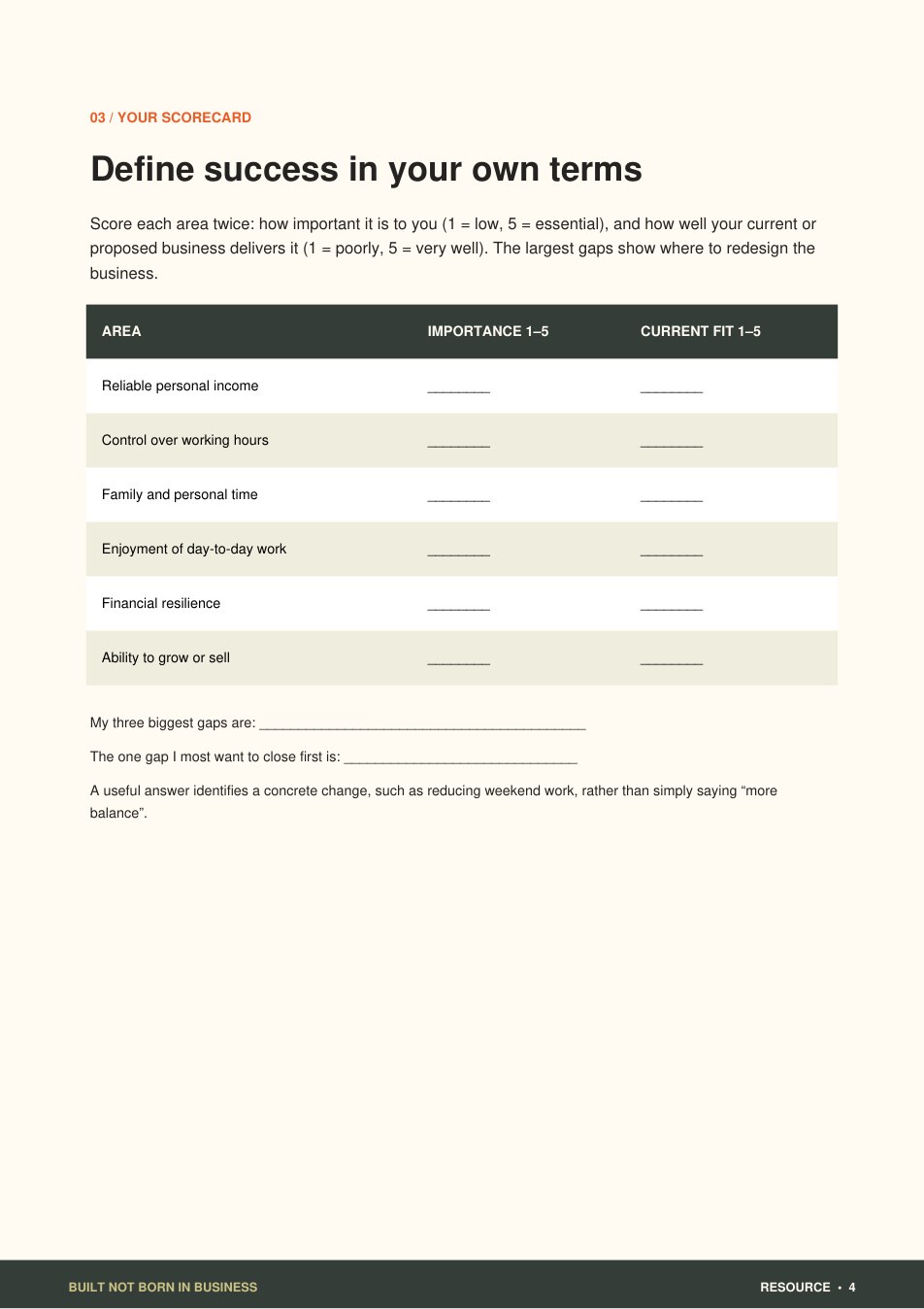
Define Your Own Business Success Workbook
A practical, standalone workbook for aspiring and existing business owners to define success, compare business models, understand their numbers and decide what to do next.
Get this resource →