Built Not Born Podcast · 6 November 2026
Heather Mills Her Life Story
Heather Mills on entrepreneurship, resilience, business setbacks and learning when to let go.
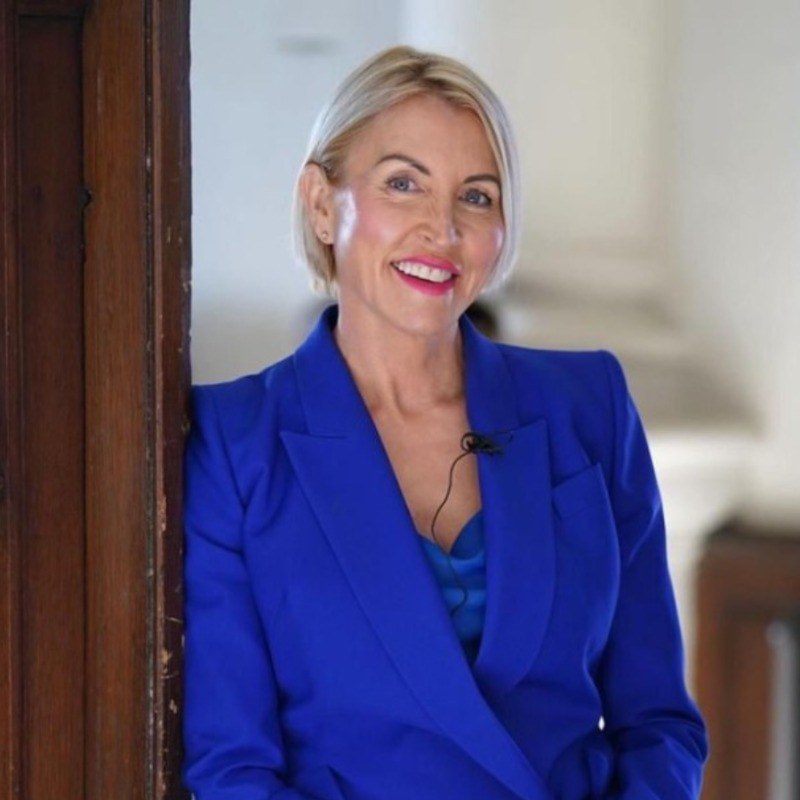 FeaturingHeather MillsEntrepreneur and charity campaigner, V-Bites




About this episode
Heather Mills joins Chris and Helen Butler to discuss the life experiences that shaped her approach to entrepreneurship, risk and resilience. She traces her earliest business ventures to her teenage years, describing how she sold products door to door, developed a frozen yoghurt business and created a modelling agency. She explains why an early experience of being dismissed from a job persuaded her to work for herself and why personal relationships were central to the way she built businesses.
The conversation moves from early success to the harder decisions that arrive when a business becomes complex. Heather recounts her experiences with V-Bites, investors, manufacturing operations and a series of setbacks. She describes learning that the ability to find solutions can also make it difficult to stop funding a venture that is no longer working. For founders, this raises practical questions about cash flow, exposure across multiple companies and how to decide whether to continue, restructure or let go.
Heather also shares her account of a serious road accident in 1993, the loss of her leg and the determination that later took her into competitive skiing. She describes developing prosthetic solutions, joining the British ski team and setting a speed-skiing record. These experiences are discussed as part of her personal approach to obstacles, rather than as a simple formula that will work for everyone.
Alongside the business stories, Chris and Helen ask about happiness, the responsibilities of employing people and what happens when financial success stops feeling rewarding. Heather discusses charity work, her wish to move away from manufacturing, the value of listening and the importance of matching people to roles they can do well. Her views on health, nutrition and public policy are presented as her personal experiences and opinions, not verified medical or economic advice.
The episode offers an unusually wide-ranging conversation about what success costs, why persistence needs judgement and how founders might protect their future when circumstances change. Listeners will hear specific examples of business decisions, setbacks, collaboration and personal reinvention, plus Heather’s quickfire reflections on leadership, communication, patience and focus.
Key takeaways
What you'll learn
- Determination can help build a business but can also delay a necessary exit.
- Protect personal security and understand the risks that cross between ventures.
- Explore collaboration and consolidation before assuming closure is the only option.
- Strong teams depend on matching people with roles that fit their strengths.
- Success and happiness are not interchangeable.
Questions from this episode
Frequently asked questions
How did Heather Mills start her first businesses?
Heather says she began selling stick-on bras door to door as a teenager, later built a frozen yoghurt venture and founded a modelling agency that paid models weekly.
What does Heather Mills say about knowing when to close a business?
She says she learnt that problem-solving and determination can become liabilities when they keep an owner funding a venture without a viable future. She recommends recognising when to change direction.
What happened to Heather Mills after her 1993 accident?
Heather recounts losing a leg after being struck by a police motorcycle, recovering from extensive injuries and later developing prosthetic solutions that helped her pursue sport.
What business alternatives does Heather Mills suggest before closing?
She encourages founders to consider merging or collaborating with similar organisations to share resources and improve resilience, while also acknowledging that closing and moving on can be the right decision.
What does Heather Mills identify as an underrated business skill?
In the episode’s quickfire questions, she identifies listening as the most underrated skill in business.
Resources from this episode
Put the ideas into practice.
Download the practical resources created from this conversation.
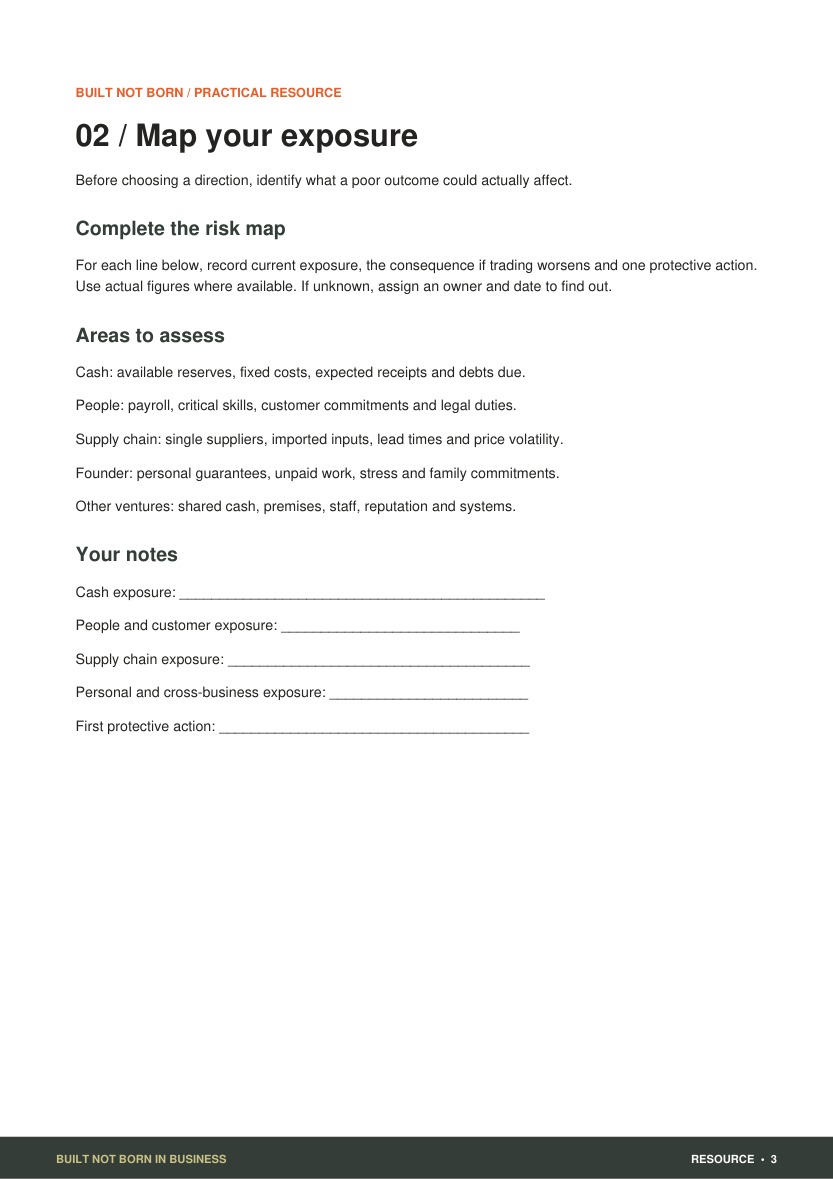
Business Resilience and Exit Decision Workbook
An eight-part practical workbook for business owners weighing up whether to stabilise, collaborate, sell or close a venture. Includes source context, risk mapping, a decision scorecard, worked example and 30-day action plan.
Get this resource →